Why Joe Biden’s Stand on Abortion an Act of Moral and Political Cowardice
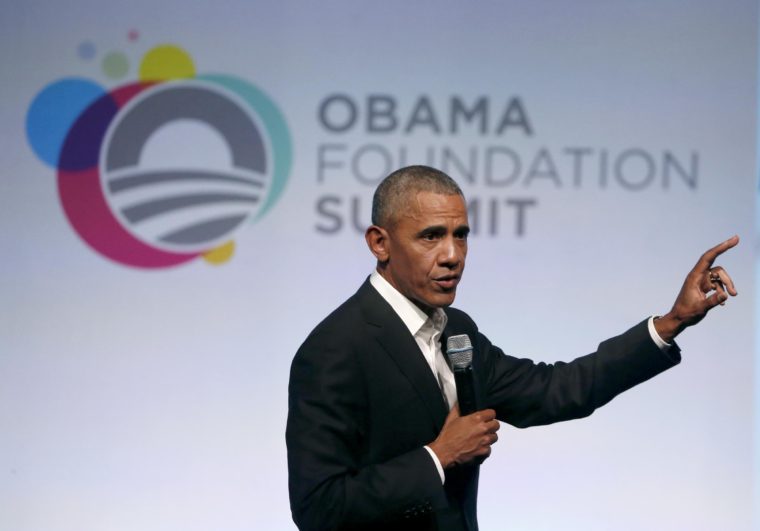
Once again, Vice Presidential Candidate Joe Biden has tried to defend his lock-step pro-abortion voting record in the Senate as being due to his high-minded respect for democratic pluralism. In reality, it’s a craven act of moral and political cowardice that is an insult to his fellow Catholics all across America.
On “Meet the Press” September 7th, Biden claimed that he “accepts” the Catholic teaching that human life begins at conception but insisted that he cannot “impose” that “personal, religious view” on other people.
This is, of course, an old dodge of Catholic Democrats in liberal states: They say that while they “personally” accept that abortion is the killing of an innocent human being, other people do not, and that therefore abortion must remain legal. Here’s what Biden told Tom Brokaw:
Look, I know when it begins for me. It’s a personal and private issue. For me, as a Roman Catholic, I’m prepared to accept the teachings of my church. But let me tell you. There are an awful lot of people of great confessional faiths–Protestants, Jews, Muslims and others–who have a different view. They believe in God as strongly as I do. They’re intensely as religious as I am religious. They believe in their faith and they believe in human life, and they have differing views as to when life–I’m prepared as a matter of faith to accept that life begins at the moment of conception. But that is my judgment. For me to impose that judgment on everyone else who is equally and maybe even more devout than I am seems to me is inappropriate in a pluralistic society.
But Biden went one step further: He admitted that critics will immediately come back and say, “Well, what about fascism? Couldn’t that same argument be used to justify fascism?” No, Biden told Tom Brokaw, because “no decent religious person thinks fascism is a good idea.”
And I know you get the push back, “Well, what about fascism?” Everybody, you know, you going to say fascism’s all right? Fascism isn’t a matter of faith. No decent religious person thinks fascism is a good idea.
This only reveals the depth of Democratic Party fatuousness.
The real analogy is not with “fascism” but with slavery: The same arguments the Democrats today use to justify legalized abortion they once used to justify legalized slavery.
In the 1850s, Democratic politicians, like Stephen Douglas, claimed that some people are morally opposed to slavery, but many people are not: therefore, they said, slavery must remain legal because northern abolitionists did not have a right to “impose their morality” on nice, churchgoing southern slave owners who did not share their moral views. Here is what Stephen Douglas said during the Lincoln-Douglas debates of 1858:
Mr. Lincoln, following the example and lead of all the little Abolition orators, who go around and lecture in the basements of schools and churches, reads from the Declaration of Independence, that all men were created equal, and then asks, how can you deprive a negro of that equality which God and the Declaration of Independence awards to him? … Now, I hold that Illinois had a right to abolish and prohibit slavery as she did, and I hold that Kentucky has the same right to continue and protect slavery that Illinois had to abolish it.
The infamous Dred Scot decision, in which the U.S. Supreme Court declared that blacks are not human beings in the eyes of the Constitution – a precise parallel with Roe v. Wade – in effect codified that logic.
The Rev. Jesse Jackson, before he sold his soul to the Democratic Party and ran for president, said precisely this: that arguments for abortion were the same as arguments for slavery.
There are those who argue that the right to privacy is of [a] higher order than the right to life … that was the premise of slavery. You could not protest the existence or treatment of slaves on the plantation because that was private and therefore outside your right to be concerned.
There are numerous logical holes in Biden’s argument. First, opposition to abortion is not a “religious” view but an ethical one, one shared by atheists such as Nat Hentoff of the Village Voice. Calling opposition to abortion a “religious” position or one stemming from “faith” is a deliberate rhetorical tactic to avoid taking moral responsibility for a public, political issue.
Second and more importantly, taking moral stands is precisely what we ask of a politician, not a cowardly dodging of an issue.
Democratic politicians like Russ Feingold and Mario Cuomo are more than willing to “impose their morality” on the rest of the country when it comes to something like capital punishment, even though polls show that 69% of the country (according to the Gallup Poll) remain in support of it. Yet only when it comes to abortion do Catholic Democrats demonstrate such remarkable respect for “pluralism.”
The truth is, pro-abortion Catholic Democrats like Joe Biden, Teddy Kennedy, Nancy Pelosi and Mario Cuomo are nothing more than political prostitutes, selling out what few principles they have in order to garner votes in liberal states where many voters support legalized abortion.
They came up with the “personally opposed, but…” dodge so they could avoid taking a principled stand on one of the most serious issues of public morality since slavery.
And just as today civilized people look back in horror at the moral cowardice of Democratic politicians who supported “slavery on demand,” so, too, in the future civilized people will look back at the mass slaughter of unborn children since Roe v. Wade — 40 million and counting — and only marvel that Catholic politicians like Biden, who knew what was the moral thing to do, could be so weak.
When it came time to take a principled stand that might jeopardize their cushy careers, sell-out politicians like Biden chose their careers.
Biblical Heritage Leads to Freedom, Religious Toleration & Human Rights
The new atheist crusaders (such as Christopher Hitchens, Sam Harris and Richard Dawkins) like to pretend that the concept of universal human rights just popped out of thin air in the 17th and 18th century, the creation of the agnostic and atheist thinkers of the French Enlightenment.
But the truth is precisely the opposite: The recognition of universal human rights is one of the preeminent legacies of the Bible and the two religions, Judaism and Christianity, centered around it.
We forget that the great English political philosopher John Locke - widely credited with working out the first systematic theory of natural (human) rights in modern times - based most of his arguments on Biblical precedents.
In his First Treatise on Civil Government, which is more Biblical exegesis than philosophy, Locke argued that human rights are not privileges dispensed or withdrawn at the discretion of the State. Rather, they are gifts from God which no prince or potentate, no state or sovereign, may take away.
Thomas Jefferson relied primarily upon Locke’s insights, and not those of French Enlightenment thinkers, when penning the Declaration of Independence — which, for the first time, proposed founding a state upon this fundamental, God-given, Biblically-based idea: “We hold these truths to be self-evident: that all men are created equal and are endowed by their Creator with certain unalienable rights…”
There is also some empirical evidence that respect for human rights grew out of the Biblical heritage when comparing the “freedom” rankings produced by the international democracy watchdog organization Freedom House - co-founded in 1941 by Eleanor Roosevelt — with the percentage of the population in each country ranked as Christian by the CIA. (The CIA designation refers more to “nominal” rather than “practicing” Christians but nevertheless is illuminating when it comes to the cultural context that produces civil liberties.)
Each year, Freedom House publishes its annual survey which attempts to measure the degree of democracy and freedom in every nation of the world, producing “scores” that represent the levels of political rights and civil liberties in each state and territory - from 1 (most free) to 7 (least free). Out of 194 countries and territories surveyed for 2006, 73 countries (38 percent) were rated Free, 54 (28 percent) were rated Partly Free, and 67 (34 percent) were rated Not Free. (This is a marked improvement over 1980 when only 23.9% of nations were rated Free… 24.8% were rated Partly Free… and 51.3% were Not Free.)
Among the countries ranked as the most free (1) and with the highest respect for civil liberties (1) are Australia (66% Christian), Austria (78.3%), the United States (79%), Canada (66%), Costa Rica (92%), Belgium (100%), Chile (100%), Denmark (98%), France (90%), Finland (86%), Germany (68%), Great Britain (71.6%), Ireland (93%), Iceland (93%), Norway (90.1%), Portugal (98%), Spain (94%), Switzerland (78.9%), Sweden (87%), Italy (90%) and New Zealand (79.5%).
These are not fixed absolutes, of course. There are exceptions.
Haiti, for example, is listed as 96% Christian by the CIA yet has among the very worst record for human rights and political freedoms. The same is true of Rwanda: Rated 93.6% Christian by the CIA, it scores a 6 out of 7 for political freedom and a 5 for civil liberties. Some Latin American countries, just emerging from years of civil war or military dictatorship, have higher Christian populations but somewhat restricted freedom. For example, El Salvador, which is 83% Roman Catholic, is rated “free” but only scores a 3 for civil liberties. Mexico, which is 95% Christian despite its historically anti-Christian government, is rated 2 for political freedom and civil liberties.
But at the opposite end of the spectrum, those countries with the smallest percentage of Christians are rated overwhelming “not free” by Freedom House and are among those with the worst ratings for civil liberties by far – but again, with a few interesting exceptions. Almost all of the Islamic countries have very small Christian populations and rank near the bottom when it comes to political freedom and civil rights - including Saudi Arabia (0% Christian and no political freedom), Sudan (5% Christian and no political freedom), Libya (3% Christian and no political freedom), Iran (1% Christian and no political freedom), and so on.
Current Communist regimes, such as China (4% Christian), Cambodia (0%), North Korea (0%), Laos (1.5%) and Vietnam (7.2%), also have very low Christian populations and virtually no freedom whatsoever.
Interestingly enough, although some of the former Communist states are still ranked as “not free” or “partly free,” including Russia (only 15% Christian) and Albania (30%); a number of former Communist countries with sizable Christian populations are now ranked near the top in terms of civil liberties and political liberty. Once these countries were freed of Soviet military domination, they quickly adopted laws protecting political liberty and basic human rights. These include Bulgaria (83.8% Christian), which scores in the top rank for political freedom and a 2 for civil liberties; Poland (91.2% Christian), which now scores 1 for both civil liberties and political freedom; Hungary (74% Christian), which now scores 1s as well; and Lithuania (85%), which now scores 1s; Romania (99%), which scores 2s;
There are also some countries that are neither Christian nor communist but which nevertheless score badly in terms of civil rights and political freedom, including Bhutan (0% Christian), rated 6 for civil liberties and 5 for political freedom; Nepal (0.2% Christian), rated 6 for political freedom and 5 for civil liberties; the Maldives (0% Christian), rated 6 for political freedom and 5 for civil liberties; Guinea (8%), rated 6 for political freedom and 5 for civil liberties; and Malaysia (7%), which scores 4s.
Finally, there are a handful of countries with extremely low Christian populations but which nevertheless score high in terms of political freedom and civil liberties. These are Israel (2%), which scores 1 for both political freedom and civil liberties; Japan (0.7%), which also scores 1s; Taiwan (4%), which scores 1s; South Korea (26%), which scores 1s; and India (2.3%), which scores 2s.
Clearly, therefore, a sizable Christian population is not a requirement for civil liberty and political freedom, but you could still make the case that those non-Christian societies that have a solid record on human rights and political liberty benefited from prolonged contact with, and influence by, Christian nations.
Israel is a special case because respect for fundamental human rights and political freedom is a preeminently Jewish cultural legacy, one that is implicit in the Torah and which Israel bequeathed to Christianity. Japan, of course, had its western-style democratic government more or less imposed upon it by U.S. Occupation Forces following its defeat in the Second World War - but what was imposed by force has now taken root and grown into a distinctly Japanese style of liberal democracy. India, which was a colony of Great Britain’s for more than 175 years, and which today still prides itself on its membership in the Commonwealth and its record as preeminent cricket champions, is today a federal republic with a president, prime minister, a bicameral Parliament and a legal system based on English common law. While only 2.3% Christian, India has adopted many of the cultural values of liberal democracy and retains, like other members of the Commonwealth, remarkably strong ties to Britain.
In conclusion, therefore, we can say that the enemies of Christianity, Judaism and the Bible have it exactly backwards: Far from being a threat to liberal democracy and political freedom, the biblical heritage is, in fact, the intellectual matrix out of which both arose.
The values and beliefs that permeate the Bible — the notion that all human beings are equal in the eyes of God and that no king or ruler may claim unquestioned obedience — were the proximate cause for the development of a religious theory of liberty and the recognition of universal human rights. It is certainly not true, as atheist crusaders claim and as the freedom rankings from Freedom House refute, that commitment to Biblical religion results in intolerance and oppression. In fact, with a few exceptions, the countries on earth that practice freedom of religion and social tolerance are those with large Christian or Jewish populations.
The Return of Medical Fascism
Anti-religious zealots are heralding the recent decision by the California Supreme Court to compel physicians to provide legal but ethically questionable medical procedures to patients even if those procedures, in particular circumstances, violate the physicians’ ethical or religious beliefs.
The ultimate goal of these zealots and their totalitarian allies in the judiciary is to force America’s estimated 573 Catholic hospitals to perform abortions, distribute abortifacent drugs such as mifepristone (RU-486), and practice sterilization and euthanasia.
In the case before the California Supreme Court, a California obstetrician and gynecologist, Dr. Christine Brody, declined on ethical grounds to provide artificial insemination procedures to a lesbian couple.
The Court ruled that doctors’ constitutional rights to freedom of religion did not trump the state’s antidiscrimination laws. “The 1st Amendment’s right to the free exercise of religion does not exempt defendant physicians here from conforming their conduct to the . . . antidiscrimination requirements,” Justice Joyce L. Kennard wrote.
The reaction among secular fundamentalists was ecstatic
In an op-ed column in the Los Angeles Times, Richard P. Sloan, a professor at Columbia University Medical Center and author of Blind Faith: The Unholy Alliance of Religion and Medicine, argued that the logic of the California Supreme Court’s opinion should be applied to other medical procedures that some doctors find ethically objectionable – including abortion and what he euphemistically terms “terminal sedation.”
“Almost every state in the nation has legislation permitting healthcare professionals — from physicians to nurses to pharmacists — to deny patients legal medical treatments that they may find religiously objectionable,” he wrote disapprovingly, adding “enough is enough.”
Sloan is particularly incensed that the Bush Administration is proposing a law that would cut off federal funding to any hospital or health plan that does not permit its employees “to opt out of participating in legal medical procedures — including those associated with reproduction and terminal sedation — that they oppose out of religious conviction.”
The new champions of medical fascism, such as the California Supreme Court, emphasize that the procedures that some physicians object to on ethical grounds – including partial birth abortion, the creation of designer babies, and denying food and water to terminal patients – are technically “legal.”
The premise behind their arguments is that anything legal is therefore ethical – and that anything legal can be made compulsory.
But we all know that this is not true: It is legal to gamble away your family’s life savings or cheat on your spouse – and yet few Americans would welcome laws or policies that made such behavior compulsory or would force others to actively assist such behavior.
What’s more, we know from recent history that government officials can certify as “legal” medical practices that most Americans, of any or no religious affiliation, would find repellent.
For example, it wasn’t too long ago in America that government officials could order patients to be forcibly sterilized if physicians deemed them, in their expert medical judgment, “unfit” to procreate.
Thirty-three states had laws not only permitting the practice but actually mandating it. As no less a legal authority than Supreme Court Justice Oliver Wendell Holmes put it, expressing the worldview of many in the judiciary, “three generations of imbeciles is enough (Buck v. Bell, 1927).”
For 40 years, from 1932 to 1972, the U.S. Public Health Service conspired with medical researchers to trick black workers in Alabama infected with syphilis into believing they were being treated when, in fact, they were really the subject of secret medical experiments.
The doctors, in the name of advancing medical science, wanted to monitor the progress of syphilis when left untreated. More than 100 patients were allowed to die when the administration of ordinary penicillin would have saved their lives.
The “Tuskegee Study of Untreated Syphilis in the Negro Male” was legal. In fact, it was conducted by the U.S. government and administered by highly trained MDs. (Although the founder of the study, Dr. Taliaferro Clark, eventually objected to the deceptive practices used — on ethical grounds — and resigned from the program a year after it began.)
Today, many Americans, including many physicians, have grave ethical objections to procedures that secular fundamentalists are not troubled by in the least – such as killing viable human infants who survive abortions, creating designer test-tube babies and eliminating those deemed to have defects, “terminal sedation,” and so on.
The new medical fascists, however, such as the judges on the California Supreme Court, want to compel all physicians to perform these practices and are using anti-discriminations laws as an excuse to do so.
That is something that all freedom-loving Americans, who cherish First Amendment protections of religious liberty, can never tolerate.
Jesus Christ Remains the Greatest Enigma in History to Believers and Skeptics Alike
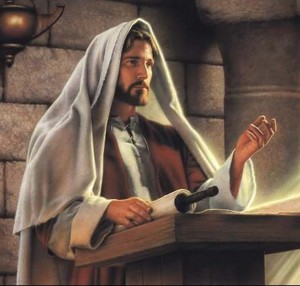
In just three years or less, the mysterious figure we now know (or think we know) as Jesus of Nazareth somehow changed the face of the world.
His real name was almost certainly Yeshu’a bar Yosef. From all the available evidence, he was a semi-skilled Jewish journeyman from a tiny village in northern Palestine who became, very briefly, an itinerant prophet, miracle worker and social revolutionary, one who challenged the religious and social institutions of his day so radically that he was put to death for it.
Of course, for two billion people on the planet today, he was also something much more: The Word of God… the wisdom and mercy and justice of God … incarnate.
What is undeniable to the honest historian is that this one man’s life, teaching and symbolic acts eventually created a social and cultural revolution that reverberated far beyond Palestine and altered almost every institution on earth — and is still felt today.
In short, Jesus changed everything: politics, art, science, law, the rules of warfare, philosophy, sexual life, the family. Even Napoleon was amazed: “Alexander, Caesar, Charlemagne, and myself founded empires; but upon what foundation did we rest the creations of our genius? Upon force. Jesus Christ founded an empire upon love; and at this hour millions of men would die for Him.”
But the question is: how?
Beyond the piety of believers and the doubts of modern skeptics lies an enduring mystery:
What did Jesus do and say, in as little as one year and a maximum of three years, that could possibly have had such an impact?
How could his rag tag band of illiterate fishermen, reformed prostitutes and tax collectors create the philosophical and social revolution that we have described in this book – one that made possible such diverse realities as experimental science, the abolition of slavery, the recognition of universal human rights, even authentic feminism?
In short: How do we explain the fact of Christianity?
****
One answer, given by scholars from a wide variety of perspectives – including that of so-called liberation theology – is that Jesus’ movement was neither small nor “rag tag.”
Instead, it was just as portions of the New Testament describe it as being, a massive popular outpouring of messianic enthusiasm, especially among the poor and marginalized, that alarmed the Jewish religious leaders of the time and made Roman military officials very nervous.
Many modern people think of Jesus as something like the befuddled hippy Christ in the 1970 play and 1973 film Godspell, teaching his message of peace and love to small groups of dazed flower children.
But what if Jesus was actually more like the figure depicted in the film and stage play Jesus Christ Superstar: A fiery, charismatic, rugged populist who drew crowds by the thousands, even tens of thousands — and whose caustic, subversive, often very funny parables about the “reign of God” and the arrogant elites who try to stand in its way electrified an entire country already seething with rebellion?
What if Jesus wasn’t the meek and mild pacifist of Christian iconography but actually something far more dangerous – a genuinely courageous iconoclast who had the sheer guts to stare down a crowd about to stone a woman to death and who stormed right into the holiest place on earth (a place with every bit of polished awe and grandeur as St. Peter’s in Rome) and began attacking the sales people and moneychangers with a whip?
Such a man could very well have put the fear of God (quite literally) into almost everyone in power — the moneyed aristocracy who controlled the Jerusalem Temple (the Sadduccees); the pious frauds who lay unjust burdens upon people’s shoulders; certainly the small band of Roman military officials charged with keeping the peace. Read the rest of this entry »
Atheists Take Credit for Science When They Had Nothing to Do with It
So if, as Albert Einstein insisted, Biblical religion was the necessary intellectual precondition for the gradual development of scientific method, how did the myth of the “scientific revolution” come about?
One reason: For the past 400 years, the partisans of irreligion-from the Marquis de Sade to Sam Harris and Richard Dawkins-have deliberately misrepresented the way science actually developed in the West as part of their ideological crusade against Judaism and Christianity.
What’s worse, the partisans of atheism have been intellectually dishonest in the extreme: They have tried to take credit for the development of science when, in fact, they had little if anything to do with it.
Many of the most ideological and dogmatic of atheist crusaders, although continually referring to science, and seeking to use science to justify their own philosophical assumptions and declarations, were not scientists themselves.
In fact, many of the most famous anti-Christian polemicists of the last 200 years-who sought to use science to justify their unbelief-never themselves set foot in a laboratory or conducted a single field observation.
That includes the Marquis de Sade (a writer), Percy Bysshe Shelley (a poet), Friedrich Nietzsche (a philologist by training), Algernon Swinburne (a poet), Bertrand Russell (a philosopher), Karl Marx (a philosopher), Robert Ingersoll (a lecturer), George Bernard Shaw (a playwright), Vladimir Lenin (a communist revolutionary), Joseph Stalin (a communist dictator), H.L. Mencken (a newspaper columnist), Jean-Paul Sartre (a philosopher), Benito Mussolini (a fascist dictator), Luis Buñuel (Spanish filmmaker), Clarence Darrow (a lawyer), Ayn Rand (a novelist), Christopher Hitchens (a journalist), Larry Flynt (a pornographer), George Soros and Warren Buffett (investors), and Penn and Teller (magicians).
In dramatic contrast, most of the true giants of empirical science-the people who founded entire scientific disciplines or who made landmark scientific discoveries-were primarily devout Christians who believed that their scientific studies, far from being in conflict with their religious faith, ultimately was dependent upon it.
In his book, The God Delusion, atheist crusader Richard Dawkins once again tries to reclaim Einstein for atheism, citing quotations at length in which Einstein denied belief in a personal God, but the truth is that Einstein was struggling to enunciate a middle position between atheism and classic theism and couldn’t seem to make up his mind how to describe it. “There is every reason to think that famous Einsteinisms like `God is subtle but he is not malicious’ or `He does not play dice’ or `Did God have a choice in creating the Universe?’ are pantheistic, not deistic, and certainly not theistic,” Dawkins writes. “`God does not play dice’ should be translated as `Randomness does not lie at the heart of all things.’ `Did God have a choice in creating the Universe?’ means `Could the universe have begun in any other way?’ Einstein was using `God’ in a purely metaphorical, poetic sense.”
Perhaps. Yet when Einstein was explicitly asked whether he believed in “Spinoza’s God”-meaning an impersonal Deistic God-this is what he said:
“I can’t answer with a simple yes or no. I’m not an atheist and I don’t think I can call myself a pantheist. We are in the position of a little child entering a huge library filled with books in many different languages. The child knows someone must have written those books. It does not know how. The child dimly suspects a mysterious order in the arrangement of the books but doesn’t know what it is. That, it seems to me, is the attitude of even the most intelligent human being toward God. We see a universe marvelously arranged and obeying certain laws, but only dimly understand these laws. Our limited minds cannot grasp the mysterious force that moves the constellations.”
Not an orthodox Jew, certainly, but hardly a snide atheist ideologue along the lines of Dawkins, Chistopher Hitchens, or Sam Harris, either.
To sum up: We have two rival claims.
On the one hand, we have scientific (let’s be charitable) amateurs-from Nietzsche and Ingersoll to Chrisopher Hitchens and Sam Harris-insisting that science and Biblical religion are fundamentally incompatible.
On the other hand, you have the greatest minds in the history of science, the people who actually made most of the discoveries that created modern science to begin with-folks like Galileo, Sir Isaac Newton, Gregor Mendel, Max Planck, Louis Pasteur, Werner Heisenberg, and even Albert Einstein-who insist that, not only is religion not at odds with science, but Biblical religion is what made science possible in the first place.
Whom should we believe?
Should we believe the attorney Clarence Darrow, who said “I don’t believe in God because I don’t believe in Mother Goose” … or should we believe Albert Einstein who said, “My religion consists of a humble admiration of the illimitable superior spirit who reveals himself in the slight details we are able to perceive with our frail and feeble mind”?
Frankly, in the great debate over religion and science, faithful Christians and Jews stand with the more enlightened half - those who make the actual discoveries in science.
Lost Gospels Revealed
A final issue when it comes to New Testament studies: The so-called “lost” Gospels.
As skeptics tell it, reflecting the worldview captured in The Da Vinci Code, the Christian church systematically suppressed the truth about Jesus and his early disciples, “censoring” alternative accounts of Jesus’ life and teaching because these texts didn’t reflect the “dogma” (primarily the alleged “sexism” and “homophobia”) of the institutional Church.
Examples of these “alternative” Gospels include the Gospel of Thomas and the Gospel of James. More recently, a Gospel of Judas was discovered and published.
The Da Vinci Code was hardly original in taking this line: In 1972, novelist Irving Wallace wrote a thriller called The Word that described, interspersed with lots of sex, the alleged discovery of an alternative gospel (the Gospel of James) that would “blow the lid” off of institutional Christianity and reveal the truth that the evil Church had kept hidden for millennia.
There’s even a secret society that has suppressed the truth that Jesus survived the crucifixion – and a man who, “if he can survive long enough,” struggles to tell the whole world what really happened.
So, is there truth to the charge? Did the Christian church “suppress” lost facts about and sayings of Jesus?
The answer of mainstream biblical scholars would be: If only! That’s because, for two centuries now, scholars have been poring over every word of every “apocryphal” (non-canonical) gospel available, desperately searching for a lost saying or an authentic new fact. Far from being “lost,” every single apocryphal gospel extant can be easily read in translation in such collections as The Nag Hammadi Library (edited by James Robinson), or in more popular anthologies such as The Complete Gospels (edited by Robert J. Miller) or The Other Gospels: Non-Canonical Gospel Texts (edited by Ron Cameron).
Alas, the results have been disappointing.
The researches of such scholars as Elaine Pagels and Bart Erhman have taught us a lot about early Gnosticism but precious little new about Jesus.
The primary reason for this is because these lost, “apocryphal” gospels were written, by and large, decades, sometimes even centuries after the canonical Gospels.
They were the creation of Gnostic sects (sort of second- and third-century New Agers) that usually just followed the outlines of the canonical Gospels and simply put into the mouth of Jesus various philosophical ramblings of a particular Gnostic sect.
Most of them strike modern readers as deadly dull and quite bizarre… and nothing like the canonical Gospels in vivid, real-life detail.
Here is a typical passage from The Gospel of Mary (Magdalene), a favorite with New Agers and conspiracy theorists:
The Savior said, “All natures, all formations, all creatures exist in and with one another, and they will be resolved again into their own roots. For the nature of matter is resolved into the [roots] of its nature alone. He who has ears to hear, let him hear.”
As you might guess, if the church “suppressed” these texts it was probably more for bad writing than for heresy.
The simple truth is that, when the early Christian leaders looked over the various works purporting to be about the life and teaching of Jesus, they found that most had little if anything to do with the Jesus proclaimed by the Church and instead were full of bizarre Greek philosophical ideas (about various deities and emanations from the godhead) that Jesus would have had nothing to say about.
That’s why the church historian Eusebius, writing around A.D. 324, spoke of the books that are “adduced by the heretics under the name of the apostles, such as the Gospels of Peter, Thomas, Matthew, and others beside them or such as the Acts of the Apostles by Andrew John, and others.”
He added the common sense observation that “indeed the character of the style itself is very different from that of the apostles, and the sentiment and purport of those things that are advanced in them, deviating as far as possible form sound orthodoxy, evidently proves they are fictions of heretical men.”
These “other” gospels, Eusebius concludes, are “spurious writings [that] are to be rejected as altogether absurd and impious.”
Atheist Crusaders Misrepresent Both History and Science in their Denunciations of the Bible

“We’re told that four fifths of American homes have a Bible, so go get it,” bellows Penn Jillette of the controversial comedy/magic act, Penn & Teller, on their Showtime TV series, Penn & Teller: Bullsh*t!
“Really, no kidding! Go get your goddamn Bible! If you don’t read along with us tonight, you’re going to think we’re making this sh*t up.”
And so begins the controversial duo’s debunking of the holy scriptures of Christianity and Judaism—a twenty-eight-minute, foul-mouthed harangue exhibiting all the erudition of a biker bar and just about as much sensitivity.
Penn, a towering lumberjack of a man with a ponytail and Norris Skipper goatee, does all the talking in the show while Teller illustrates his points with little magic tricks.
“Tonight, we’re going to take you through the damn Bible and show you it’s full of inaccuracies, inconsistencies, and outright impossibilities … that it’s more fiction than fact,” he announces solemnly—and then, thumping his black leather Bible, he adds, “You know, being on TV, in a suit, and yelling with this damn book in my hand … I look just like one of those evangelical assh*les.”
On and on it goes.
Anyone who says that Christianity in general, and the Bible in particular, are not mocked in popular culture has not been watching TV in a while.
Penn & Teller trot out a handful of alleged Biblical “experts”—such as Michael Shermer, publisher of Skeptic magazine—to make their case against the Bible.
“The more we learn about archaeology and history of Biblical times,” says Shermer excitedly, “the more we realize that most of the stuff in the Bible is fiction.”
Want proof?
In the first chapter of Genesis, Shermer points out, Adam and Eve are created at the same time. In the second chapter, Adam is created first.
See? Right off the bat, you know the whole book is a complete fraud. Inconsistencies like that just rattle your faith to the very bone.
Read the rest of this entry »
The Biblical Roots of Thanksgiving
Unbeknownst to many Americans, Thanksgiving is yet another legacy of the Biblical heritage that shaped American law and culture over the centuries.
There is at least some evidence that the deeply pious Pilgrims — who, as Puritans, believed the Old Testament law was binding on Gentiles as well as Jews — may have been partially inspired by the Jewish harvest festival of Booths (Sukkot).
Sukkot is a week-long celebration, mandated in Leviticus 23, in which the Jewish people remember and give thanks for their deliverance from bondage in Egypt. It is usually observed in October — as was the original Thanksgiving in 1621.
At the very least, the concept and duty of thanksgiving is deeply rooted in the Biblical tradition. Indeed, you can actually see much of the Torah’s ceremonial commandments as being nothing less than institutionalized thanksgiving: The Sabbath, Passover, the Festival of Weeks, The Festival of Booths, the entire sacrificial system, seeks to inculcate among the people the awareness of divine graciousness.
“He appointed some of the Levites to minister before the ark of the LORD, to make petition, to give thanks, and to praise the LORD, the God of Israel,” says Chronicles. “Give thanks to the LORD, call on his name; make known among the nations what he has done,” sang the Psalmist.
The apostle Paul, in the earliest book in the New Testament, makes thanksgiving a virtual commandment: “Give thanks in all circumstances, for this is God’s will for you in Christ Jesus” (1 Thessalonians 5:18)
It’s hardly surprising, then, that the Pilgrims set aside a special time to give thanks to God for his mercy.
Thanks to contemporary accounts written by Edward Winslow (in his 1621 A Journal of the Pilgrims at Plymouth) and Governor William Bradford himself (History Of Plymouth Plantation), we have a pretty good idea of what happened 386 years ago.
As most people know, the first winter was devastating: Of the 110 Pilgrims and crew who left England, only about 50 survived the cold and hunger of that first winter.
But then, on March 16, with freezing winds still blowing across the Atlantic ocean, a seeming miracle occurred. An Abanki Indian named Samoset strolled right into the Pilgrim settlement and announced, in English, “Welcome!” Samoset had learned English from British fishermen along the coast. Samoset brought his friend, Squanto (Tisquantum), who not only spoke better English but had actually lived in England for nearly a decade. He had been kidnapped from the Plymouth area in 1608 and had traveled back and forth.
It was Squanto who taught the Pilgrims how to grow corn, how to catch fish and eels, how to tap maple syrup — and basically how to survive in this harsh Massachusetts winter.
By the time fall arrived, the Pilgrims meager barley and wheat crops were offset by a bountiful supply of corn, fish and wild turkeys. For that reason, the deeply pious Puritan Governor Bradford, reflecting on the ancient Israelites’ thanksgiving for their deliverance from Egypt, proclaimed a day of thanksgiving.
Squanto, the local chief Massasoit and 90 Indian braves came to the three-day celebration — and brought most of the food!
Thanksgiving has evolved into a secular holiday in the United States, shared by people of all faiths and no faith, but we should remember that our Pilgrim forefathers and foremothers looked to Biblical precedents for their inspiration. Plus, it bears remembering whom the early Pilgrims were thanking as they enjoyed the unexpected bounties of nature and the equally unexpected kindnesses of America’s native people.